(Advance/content warning: it’s a raw one full of personal reflection)
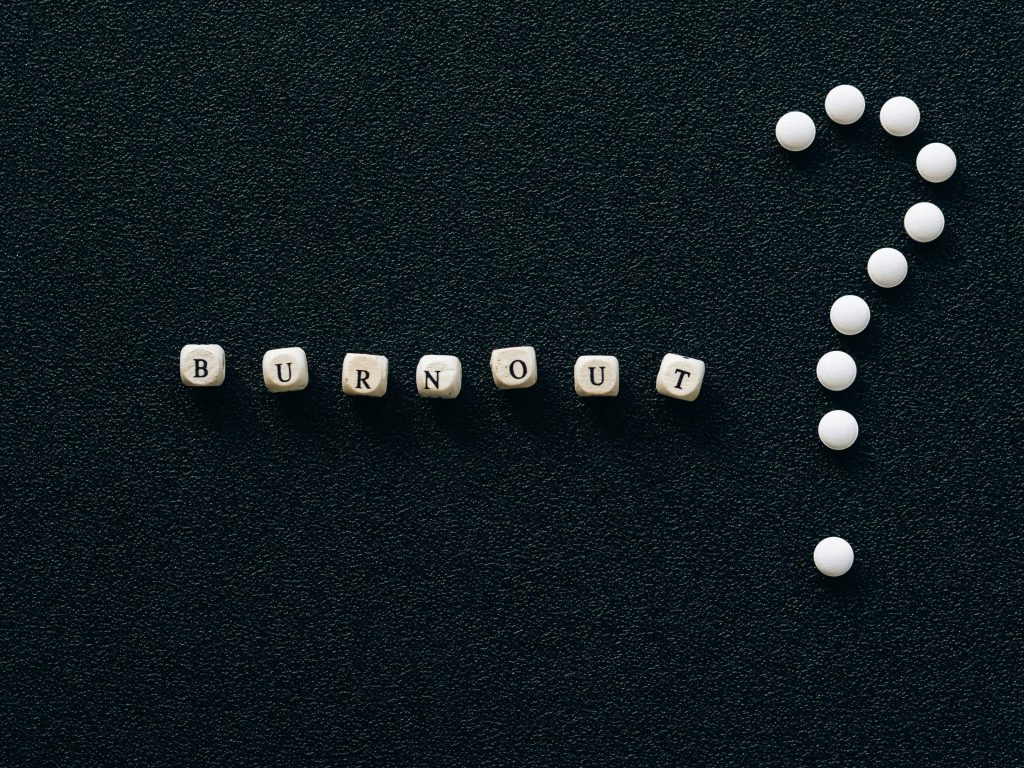
We’ve all heard the term ‘burnout’ but do we really (a) know what it means and (b) use it in the right way?
In neurotypical people, burnout refers to the feeling of mental and physical exhaustion due to prolonged stress, such as at work. For some, this often manifests in a similar way to depression.
Autistic/neurodiverse burnout is different from depression and the neurotypical definition of burnout1. You can search on social media with its very own hashtag — #AutisticBurnout but academic literature is pretty sparse at present.
I’m very fortunate to work in a Faculty where my several of my psychology colleagues have a keen interest in neurodiversity, with it forming the basis of their research. In a publication2 with contributions from these colleagues, there’s been an attempt to define autistic burnout as:
- chronic exhaustion
- losing skills
- lowered tolerance for stimuli
So what can this look like?
As neurodiversity is a spectrum, it’s often different for everyone, although Freudenberger3 proposed a set of 12 stages of burnout — from first signs to more severe outcomes. They’ve not been studied independently but you may find reference to them elsewhere.
- excessive drive or ambition
- pressure on self to work harder
- neglect of your own needs
- dismissal of your problems (“displacement of conflict”)
- lack of time for your needs outside of work
- denial and impatience
- withdrawal
- behavioral changes, including impatience or aggression
- detachment from reality (depersonalisation)
- inner emptiness or anxiety
- depression
- mental or physical collapse
My personal experience
After my diagnostic assessment, the psychologist presented her initial hypothesis of Autism and Inattentive ADHD (as I had expected) and also said that based on our discussions, she felt that I had been in burnout since late 2019. That caught me off guard, as while I felt tired and lacked motivation for certain projects or tasks, I didn’t actually feel like that aligned with my own definition of burnout.
For me, that burnout manifested in a variety of ways (and still does). Over this period, I worked towards promotion to my current role and commenced in post on the first day of the first lockdown. The need for quick actions to try and maintain the student experience, or to respond to new Governmental guidance etc, meant that I was constantly having to be creative. I had excellent feedback from my line manager and was even told that I ‘shone’ and ‘came into my own’ during this time but I now believe that was related to the dopamine hits that I got each time I knew I’d implemented something that could make a positive difference. Those dopamine hits just kept me going.
In 2019, a traumatic event within my family led to me taking antidepressants, which I believed would help me come to terms with everything that happened (in addition to talking therapy). I now believe that this was perhaps not the right course of action. This isn’t the fault of anyone in particular; depression is often diagnosed without any consideration of neurodiversity as we still have so much to learn about it.
On reflection, after 4 years, I can see just how burnt out and (in my opinion, ill) I was between 2019 and my diagnosis in late 2022.
However, work wasn’t all sunshine and roses, creativity and productivity. The parts of my job I knew well, I could do in my sleep (just as well, really) but when asked to get involved in a new task, it was much more difficult. One in particular, I was really excited by but the scope kept changing (sometimes for valid reasons) and I struggled to cope without a clear view of where it was going. As such, I felt that the values of the project didn’t always match mine and so it got pushed to the ‘too difficult’ pile and I procrastinated until such time as (I hoped) my motivation came back. It never did.
This wasn’t like me; I was always one to get things done and to do it to the best of my ability. It’s one of the reasons I started to consider a diagnosis; was I autistic? Was that the reason the lack of value congruence and multiple changes were so difficult to deal with? (Spoiler Alert – Yes!)
During the pandemic, I had the belief that if I had free time I was slacking and needed to fill it with something. Fill it, I did. I already ran my own craft business (shameless plug: Krafti Kiki) but took on 3 more over the course of those three years. I told myself that it was a way to make more money/improve our lifestyle, and chose companies that I felt aligned with my goals of improving my wellbeing. In a way, they did, but they were also the biggest demonstrators of my burnout. If only I knew then what I know now…
People-pleasing tendencies are often part of ADHD and these were running wild during that time. I hated the idea of my customers wanting a product and me not being able to provide it. This people-pleasing coupled with a lack of impulse control, meant that I made sure I had stock of everything, just in case. Spread that across 3 businesses, and that’s a lot of stock and a lot of money. Something I was blind to at the time. What’s worse, this also extended to my personal life; I’ve always had in mind that I needed to be ‘the perfect host’ and have in stock anything that anyone might possibly request. Cue gin and rum club subscriptions, to ensure variety in our home bar. Clearly, we weren’t socialising during the pandemic and so the number of bottles grew and grew…
I kept pushing through and running all 4 businesses once everywhere reopened, often doing at least one market per month selling stock from anywhere between 1 and 4 businesses – it was bonkers!
My pandemic hyper focus became my health, and I managed to lose over 3 stone attending virtual Slimming World classes and with the support of my then husband. That’s one positive that came out of it, although unfortunately, all of those efforts are now undone.
Fast forward beyond the pandemic, and a number of changes to my personal life. I’m still struggling with the symptoms of burnout:
- Trouble holding attention on tasks activities – think magpies and ‘something shiny’
- Zoning out
- Not following through on instructions and failing to finish chores etc
- Trouble organising tasks and activities – even booking a holiday fills me with dread!
- Avoiding, disliking, or reluctant to do tasks that require mental effort over a long period of time (see above!).
- Losing things necessary for tasks and activities – read up on object permanence.
- Motivation immobilisation (also known as ADHD paralysis)
This means that there are times when I physically don’t have enough energy to cook, reheat a meal, or sometimes manage basic self care. I have to pick and choose every day where to use what little energy I have. I also often forget to eat or drink and sometimes reach 10pm before I realise I’ve not had anything since breakfast (food or drink!).
I had hoped to get out of burnout myself but realised in Nov 2023 that I couldn’t do this without help. I started titration and am working to find my optimum dose of methylphenidate to keep pushing me forward.
I still have days where I struggle but I’m starting to recognise those times when I was unwell and how they manifested. I’ve also started on a massive decluttering of all of the stock I amassed and millions of other items I no longer need. While I’m donating all of these things; I’ve decided it’s better for my mental health to create space in my mind by making space in my house. That’s worth much more than the money (although it would be helpful!).
I’ve still got a very long road ahead of me (someone once said that on average it takes you half of the time you were in burnout to recover, although I’m not sure how true that is) but I’m taking each day as it comes. On the few days I have more energy, I try to make the most of it and meet with friends, or try and do jobs around the house. Sometimes, I’m lucky and I have the impulse to tidy, clean or declutter so I have to do it when I think about it, regardless of the time of day (assuming it doesn’t negatively impact others). I’m working on my self-compassion and not chastising myself if I haven’t achieved everything I hoped to.
I’ve also automated some of my life to help reduce the amount of executive function required; I use subscribe and save on Amazon, I have birthday cards delivered to me the month before they’re due, I use AI productivity software to manage my work diary, task lists and sometimes my social life and home chores so I don’t have to remember to do every little thing. Sometimes it may be hard to take that step because it may cost more in the short term, or because you don’t fully align with the values of a company. I completely understand that and absolutely respect those views but for me, my wellbeing is the most important thing and if that’s what it takes to keep me here day to day then that’s what I’ll do; I’ll be kind to myself and not berate myself for making choices that I wouldn’t usually, or that others disagree with. I like to think that those values remain but the importance of them varies depending on where you are in life, and there’s nothing wrong with that.
How to help manage burnout
Again, this is different for everyone and somethings may not work for the particular stage of burnout someone is in.
Most recommendations will focus around identifying your key stressors and reducing or removing them, self-compassion, sleep/rest, doing things you enjoy, and sometimes therapy. Above all, be patient with yourself.
If you want more information on what burnout can look like in women, and why we may have a heightened pre-disposition for it, you may want to read this article https://www.additudemag.com/how-to-recover-from-burnout-women-adhd/.
References
- Higgins, J. M., Arnold, S. R., Weise, J., Pellicano, E., & Trollor, J. N. (2021). Defining autistic burnout through experts by lived experience: Grounded Delphi method investigating #AutisticBurnout. Autism, 25(8), 2356-2369. https://doi.org/10.1177/13623613211019858
- Raymaker, D. M., Teo, A. R., Steckler, N. A., Lentz, B., Scharer, M., Delos Santos, A., Kapp, S. K., Hunter, M., Joyce, A., & Nicolaidis, C. (2020). “Having All of Your Internal Resources Exhausted Beyond Measure and Being Left with No Clean-Up Crew”: Defining Autistic Burnout. Autism in adulthood : challenges and management, 2(2), 132–143. https://doi.org/10.1089/aut.2019.0079
- Kaschka, W. P., Korczak, D., & Broich, K. (2011). Burnout: a fashionable diagnosis. Deutsches Arzteblatt international, 108(46), 781–787. https://doi.org/10.3238/arztebl.2011.0781







 The Atypical Academic
Leave a reply to Belonging (and the Absence of It) – The Atypical Academic Cancel reply